There is a side of Istanbul that cannot be fully understood by visiting palaces, mosques and museums alone. It lives in the hands of its craftspeople—in the knot of a handmade carpet, the painted line of a ceramic artist and the patient work required to turn traditional knowledge into something useful and beautiful.
As a licensed professional tour guide in Istanbul, I have spent years introducing visitors to the city's history. Some of the most memorable moments happen when we step away from famous monuments and meet people who continue living traditions.
Turkish carpets: more than decoration
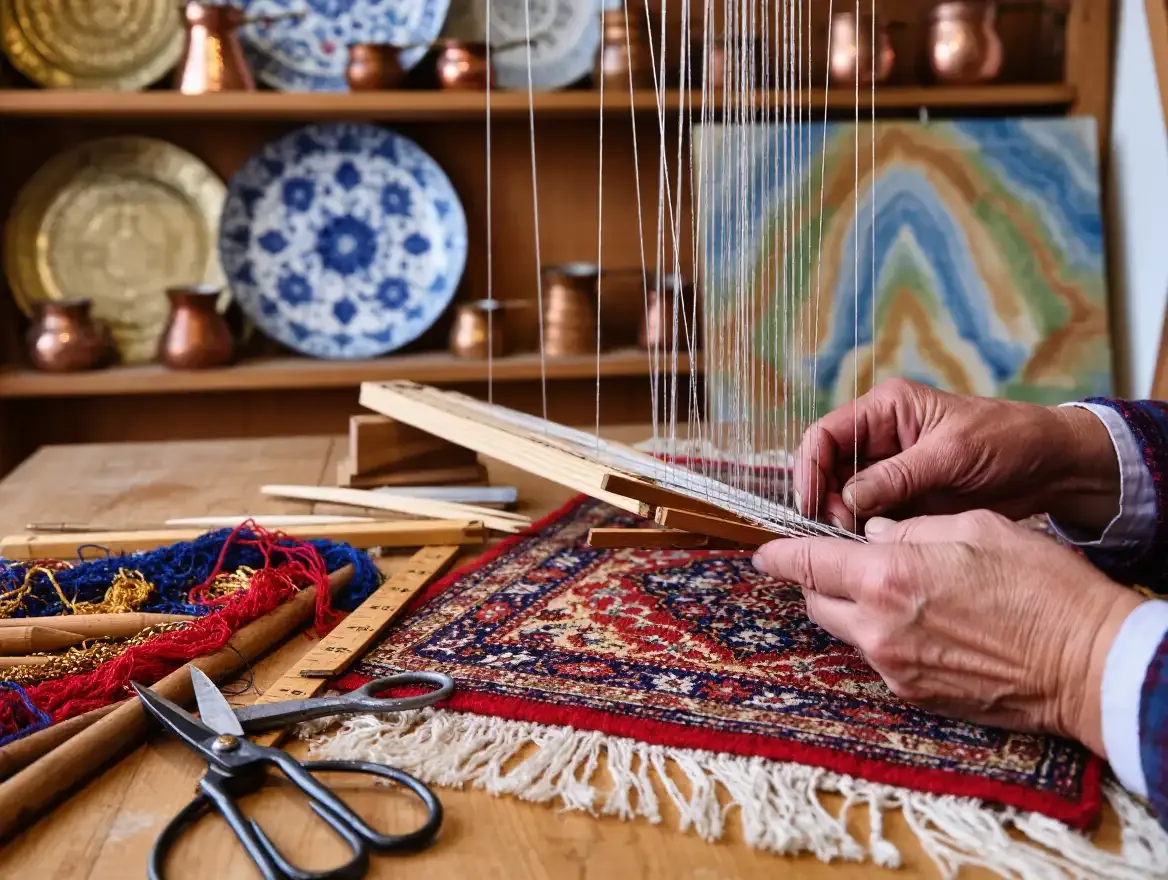
An authentic handmade Turkish carpet may require months of work, depending on its size, material, knot density and complexity. Weaving in Anatolia has long been connected with family life, regional identity, practical needs and artistic expression.
Patterns may carry regional or personal meanings, but they should not be treated as one universal symbolic language. A knowledgeable specialist can explain the difference between a hand-knotted carpet and a flat-woven kilim, how wool, cotton and silk change the result, and why knot count alone does not determine value.
- How handmade construction differs from machine production
- How materials, dyes and regional techniques affect a textile
- What to ask about age, origin, condition and care
- Why workmanship and documentation matter
Kilims: stories woven into everyday life
A carpet has a pile surface; a kilim is generally flat-woven. Kilims have been used as floor coverings, wall hangings, storage textiles and practical household objects across Anatolia. Some pieces are contemporary, while others are vintage or antique.
Visitors should feel comfortable asking whether a piece is handmade, where it comes from, which materials were used and whether it is new or old. These are not rude questions—they are part of appreciating the maker and the craft.
İznik and Kütahya ceramics: the colors of Ottoman art
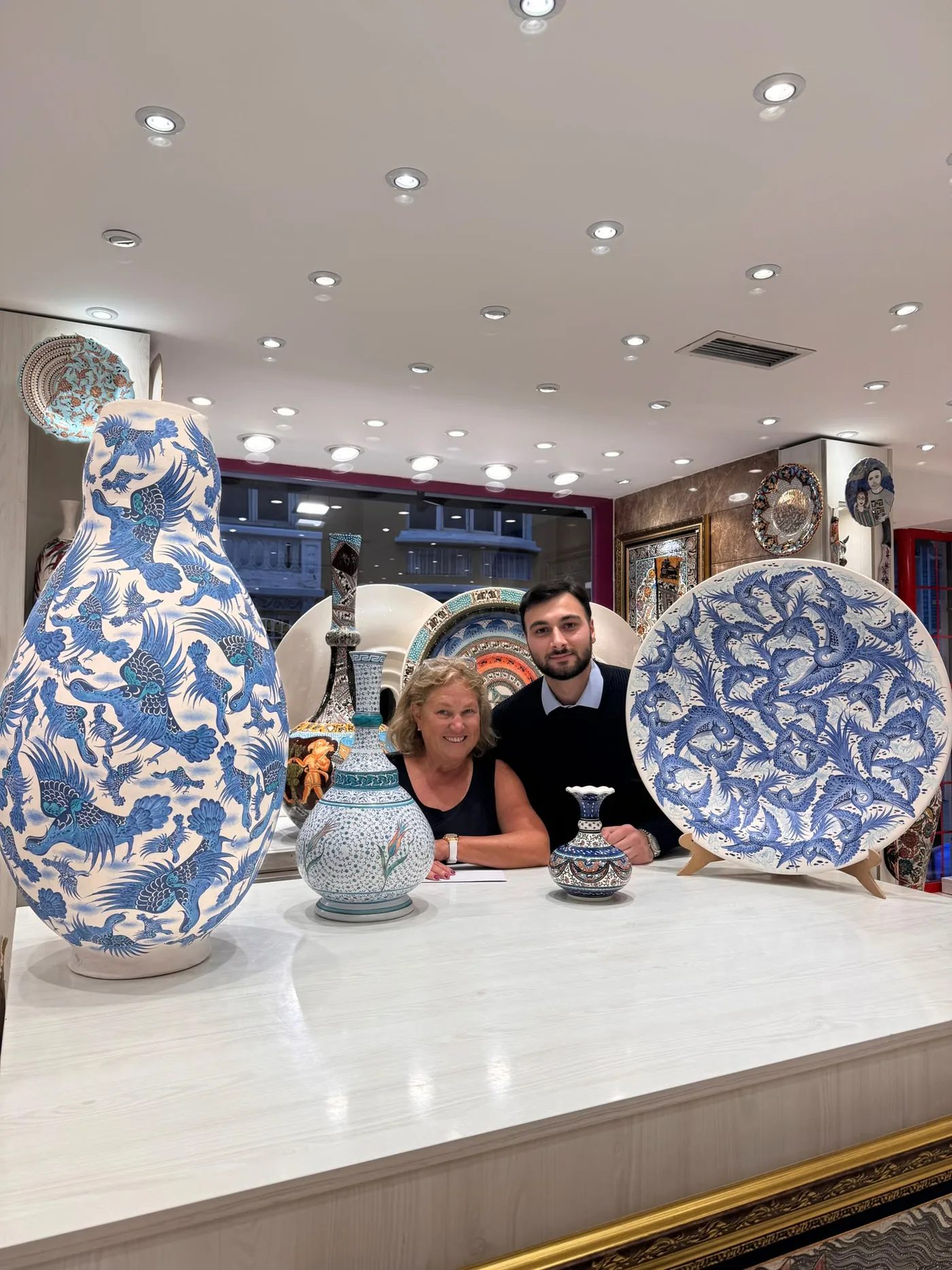
The blue, turquoise and red decoration seen in Ottoman mosques and palaces belongs to one of Türkiye's most celebrated artistic traditions. İznik became especially famous for refined floral designs—tulips, carnations, roses, leaves and flowing patterns—while Kütahya developed its own important ceramic heritage.
Depending on the workshop, guests may learn about shaping, drawing, hand-painting, glazing and firing. Not every gallery produces everything on-site, so a responsible guide should explain clearly what is being demonstrated and what is simply being displayed.
Leather craftsmanship: understand before you choose
Istanbul offers traditional and contemporary leather jackets, bags and accessories, but not every product has the same materials or construction. Ask about the leather type, finish, stitching, lining, place of manufacture, maintenance and return terms.
An expensive product is not automatically better. The purpose of expert explanation is to give you enough knowledge to make your own decision.
Why cultural workshops are different from ordinary shopping stops
Istanbul has thousands of shops. Local knowledge can help visitors find specialists who explain their work, answer questions openly and provide demonstrations when available. Guests must always feel comfortable saying, “Thank you—I enjoyed learning, but I am not looking to buy.”
Our craft-focused experiences are interest-led. Tell us whether you are curious about carpets, kilims, ceramics, tiles, leather, jewelry or textiles, and the route can be shaped accordingly. Workshop access and demonstrations remain subject to availability.
Certificates, recommendations and government approval
Business registration, tourism licensing, cultural-heritage protection and product certification are different systems. A registered shop is not automatically a government-certified producer of handmade carpets. A licensed guide cannot guarantee that every item in a workshop is handmade, and a guide's recommendation does not create a government guarantee.
If a seller refers to a certificate, ask to see it and understand exactly what it covers. For a meaningful purchase, request a proper invoice, written product description and clear delivery or return terms.
Guide commissions: a transparent answer
Some workshops may compensate a guide or tour company for referring customers. Arrangements vary and should comply with applicable professional and legal requirements. A referral relationship must never create pressure to purchase.
- Participation in a demonstration does not require a purchase.
- You are free to compare products and prices.
- You should receive clear information about anything you buy.
- You can decline an offer without discomfort.
Refunds and after-sales protection
Refunds are not automatically guaranteed because a business is registered, recommended by a guide or connected with tourism. Consumer rights can depend on the product, the sales method and the circumstances.
Before a significant purchase, ask for a detailed receipt or invoice, materials and origin where relevant, written return and exchange terms, shipping information and after-sales contact details. If the answers are unclear, you can simply walk away.
You do not have to buy anything
You can learn about weaving without buying a carpet, admire ceramics without purchasing a plate and explore leather craftsmanship without ordering a jacket. Sometimes the most valuable souvenir is a story, a conversation or a deeper understanding of another culture.
Traditional craftsmanship takes time. Responsible cultural tourism can help keep these skills visible, whether a visitor makes an informed purchase or simply learns, asks questions and shares accurate information.
Come for the history. Stay for the human stories.
Explore Turkish craftsmanship with a licensed local guide, knowledgeable specialists and the freedom to move at your own pace. No pressure. No obligation to buy. Just genuine cultural discovery.
View the private crafts experience →