Licensed guide, private vehicle and professional driver, with hotel pickup and return in the agreed service area. Museum tickets, meals and drinks are additional. Allow 5–7 hours; the final route and group arrangements are confirmed personally before booking.
Request this €300 experience →Everyone Visits Constantinople's Monuments. But Who Explores the Walls That Protected Them?
Every year, millions of travelers come to Istanbul to admire Hagia Sophia, the Blue Mosque, Topkapı Palace, and the Basilica Cistern.
And rightly so.
These are extraordinary monuments, representing some of the greatest achievements of Byzantine and Ottoman civilization.
But after years of guiding visitors through Istanbul, I have come to believe that one of the most important chapters of the city's history remains largely overlooked.
The walls of Constantinople.
Most visitors never discover the enormous defensive system that protected this imperial capital for more than a thousand years.
They see Hagia Sophia without understanding the fortifications that helped preserve the city around it.
They visit the famous palaces without discovering the imperial gateways, military towers, and neighborhoods that formed the boundaries of ancient Constantinople.
They hear about the Ottoman conquest of 1453 without fully understanding why the city was so difficult to capture.
And they leave without exploring some of the finest surviving Byzantine art and architecture in Istanbul.
That is why I created this experience.
Not simply to show visitors a collection of ancient walls, but to take them on a historical journey around Constantinople itself.
We begin beside the Sea of Marmara, follow the great land walls toward the Golden Horn, explore the extraordinary Byzantine heritage of Chora and Tekfur Palace, and continue along the historic northern waterfront through Eminönü and Sirkeci.
Finally, we return to Sultanahmet to discover a lesser-known Byzantine cistern hidden beneath the modern city.
By the end of this journey, you will understand Constantinople not simply as a collection of famous monuments, but as a complete imperial city.
1. The Marmara Sea Walls: Where Our Journey Begins
Our experience begins with a scenic drive along the historic route of Constantinople's Marmara Sea Walls.
Today, this coastline is filled with roads, railway infrastructure, neighborhoods, and the daily movement of modern Istanbul.
But fifteen centuries ago, this was one of the most important defensive boundaries of the Byzantine capital.
Constantinople occupied a remarkable peninsula.
The Sea of Marmara protected its southern coastline.
The Golden Horn formed a natural harbor along its northern side.
And the Bosphorus connected the city to the Black Sea and the wider maritime world.
This geography gave Constantinople extraordinary strategic advantages.
But geography alone was not enough.
The Byzantines constructed and maintained fortifications along the coast to protect the city from seaborne attacks.
As we drive beside the historic shoreline, I explain how the maritime defenses worked, how the city depended on its harbors, and why controlling the waterways was essential to imperial survival.
Along the way, we encounter the surviving remains and historical locations of the sea-wall system.
I encourage guests to imagine the coastline before modern Istanbul.
Merchant ships approaching from the Mediterranean.
Watchmen observing the sea.
Sailors entering the city's harbors.
And behind the walls, one of the most important capitals in the medieval world.
Our first major landmark brings the story of the sea and land defenses together.
2. Marble Tower: Where the Sea Walls Meet the Land Walls
At the southwestern edge of historic Constantinople stands the remarkable Marble Tower, known in Turkish as Mermer Kule.
This is one of the most meaningful places to begin understanding the city's defensive geography.
Here, the great landward fortifications met the coastal defenses of the Sea of Marmara.
The Marble Tower is a surviving reminder that Constantinople's defenses were conceived as an interconnected system.
The walls did not exist independently.
They were designed to protect the city from different directions, using both the natural geography and sophisticated military engineering.
When we stop here, I explain how the defensive lines connected and why this location mattered.
It is also an opportunity to introduce visitors to the extraordinary construction techniques used by Byzantine engineers.
Stone.
Brick.
Mortar.
Defensive towers.
Multiple lines of protection.
And centuries of repairs and adaptations.
From this point, our journey turns north toward the most famous monumental gateway of Constantinople.
3. The Golden Gate: The Entrance of Emperors
Our next stop is the magnificent Golden Gate.
For many travelers, this is one of the most surprising discoveries of the entire experience.
Because before visiting, they often have no idea that such an extraordinary imperial monument still exists in Istanbul.
The Golden Gate was not an ordinary entrance into the city.
It was associated with the ceremonial arrival of Byzantine emperors, particularly following military victories.
Imagine an emperor approaching Constantinople after a successful campaign.
Soldiers marching.
Officials waiting.
Crowds celebrating.
And a magnificent monumental gateway announcing the power and prestige of the Roman Empire.
The exact early construction history of the Golden Gate remains a subject of scholarly discussion, but its importance in Constantinople's imperial ceremonial landscape is clear.
Here, I explain the relationship between Roman triumphal traditions and the Byzantine imperial court.
Because the people we now call Byzantines considered themselves Romans.
Constantinople was their New Rome.
And the Golden Gate expressed the grandeur of that imperial identity.
At the Golden Gate, we are not simply looking at a defensive entrance. We are standing before a monument to imperial ambition.
4. Yedikule Fortress: Where Two Empires Meet
Just beside the Golden Gate stands Yedikule Fortress, the famous Fortress of the Seven Towers.
This extraordinary site brings Byzantine and Ottoman history together.
The location formed part of Constantinople's ancient defensive system.
After the Ottoman conquest of 1453, Sultan Mehmed II developed the fortress by incorporating existing Byzantine structures and adding new towers and walls.
Over the centuries, Yedikule served several purposes, including as a treasury, stronghold, and prison.
Its story reveals the remarkable transformation of Constantinople into Ottoman Istanbul.
Here, I explain how the Ottoman rulers inherited a city filled with Roman and Byzantine monuments.
Some buildings were transformed.
Others acquired new functions.
New structures appeared beside ancient ones.
And the city's history continued.
This is one of the things I love most about Istanbul.
Its civilizations are not always separated into different neighborhoods or different museums.
Sometimes they stand together in the same monument.
Yedikule is not simply Byzantine or Ottoman. It is a place where the history of both empires can be understood together.
5. The Theodosian Land Walls: A Military Masterpiece
From Yedikule, we continue along the magnificent Theodosian Land Walls.
These are among the most remarkable surviving defensive fortifications of the ancient and medieval world.
Constructed primarily during the early fifth century under Emperor Theodosius II, the land walls protected the western approach to Constantinople.
They were far more sophisticated than a single stone barrier.
The defensive system included a massive inner wall, towers, an outer wall, and a moat along much of the route.
An attacking army had to overcome successive layers of defense.
Even if soldiers managed to penetrate one obstacle, further barriers remained.
The system gave defenders an enormous tactical advantage.
For centuries, the walls helped Constantinople withstand repeated sieges and military threats.
Among the city's enemies were Avars, Sasanian Persians, Arab armies, Bulgarians, and other forces seeking control of the imperial capital.
The walls were damaged by earthquakes and repaired repeatedly.
They were strengthened, adapted, and maintained across generations.
And they remained central to the city's defense until the Ottoman conquest in 1453.
Did the Walls Protect More Than Constantinople?
This is one of the most fascinating questions I discuss with my guests.
Constantinople was not merely a wealthy capital.
It was a political, military, religious, and commercial center connecting Europe and Asia.
Its survival influenced the development of the eastern Mediterranean and southeastern Europe.
During the great sieges of the seventh and eighth centuries, the city's defenses helped prevent attacking armies from capturing a strategically important imperial capital.
Had Constantinople fallen centuries earlier, the political and religious history of the region might have developed very differently.
Of course, history cannot tell us exactly what would have happened.
The walls did not single-handedly determine the fate of every European kingdom.
But their contribution to the survival of Constantinople was extraordinary.
These fortifications protected more than buildings. They helped preserve an imperial center whose existence shaped the history of an entire region.
6. Ancient Gates, Towers, and Inscriptions: Reading History in Stone
As we follow the land walls, we make selected stops at important surviving gates, towers, and inscriptions.
This is one of my favorite parts of the experience.
Because here, the walls begin to speak.
At several locations, ancient Greek and Latin inscriptions preserve information about construction, repairs, emperors, and officials.
Some inscriptions commemorate the restoration of damaged fortifications.
Others express imperial authority or the pride of those responsible for protecting the city.
One of the most fascinating episodes concerns the rapid restoration of the walls after earthquake damage in the fifth century.
Imagine the urgency of the situation.
The capital's defenses have been damaged.
A military threat may be approaching.
Workers must be organized.
Materials must be gathered.
And the city must restore its protection as quickly as possible.
An inscription celebrating such an achievement is more than a historical document.
It is a direct message from the people who faced those challenges.
When I show visitors these inscriptions, I explain not only what they say, but why they were placed there.
They are reminders that the walls were built, repaired, and defended by real people.
People who lived, worked, feared invasion, and took pride in protecting their city.
Sometimes, the smallest surviving details reveal the most human stories.
7. Why Constantinople Survived for So Long — and Why It Finally Fell
The walls were extraordinarily effective, but they were never completely invincible.
In 1204, during the Fourth Crusade, Latin crusaders captured Constantinople after attacks that included a decisive breakthrough through the Golden Horn defenses.
The event was catastrophic for the Byzantine Empire.
In 1261, Byzantine forces recovered the city, but the empire never regained its former strength.
By the fifteenth century, Constantinople was politically and economically much weaker than it had been during its greatest centuries.
In 1453, Sultan Mehmed II brought a powerful Ottoman army against the city.
The siege combined artillery, military engineering, naval operations, and sustained attacks.
On 29 May 1453, Constantinople fell.
I often explain to visitors that this was not simply a story of cannons destroying an ancient wall.
It was the outcome of centuries of political, economic, technological, and military change.
Understanding the walls helps us understand why the conquest was so difficult.
Understanding the empire's long history helps us understand why it eventually became possible.
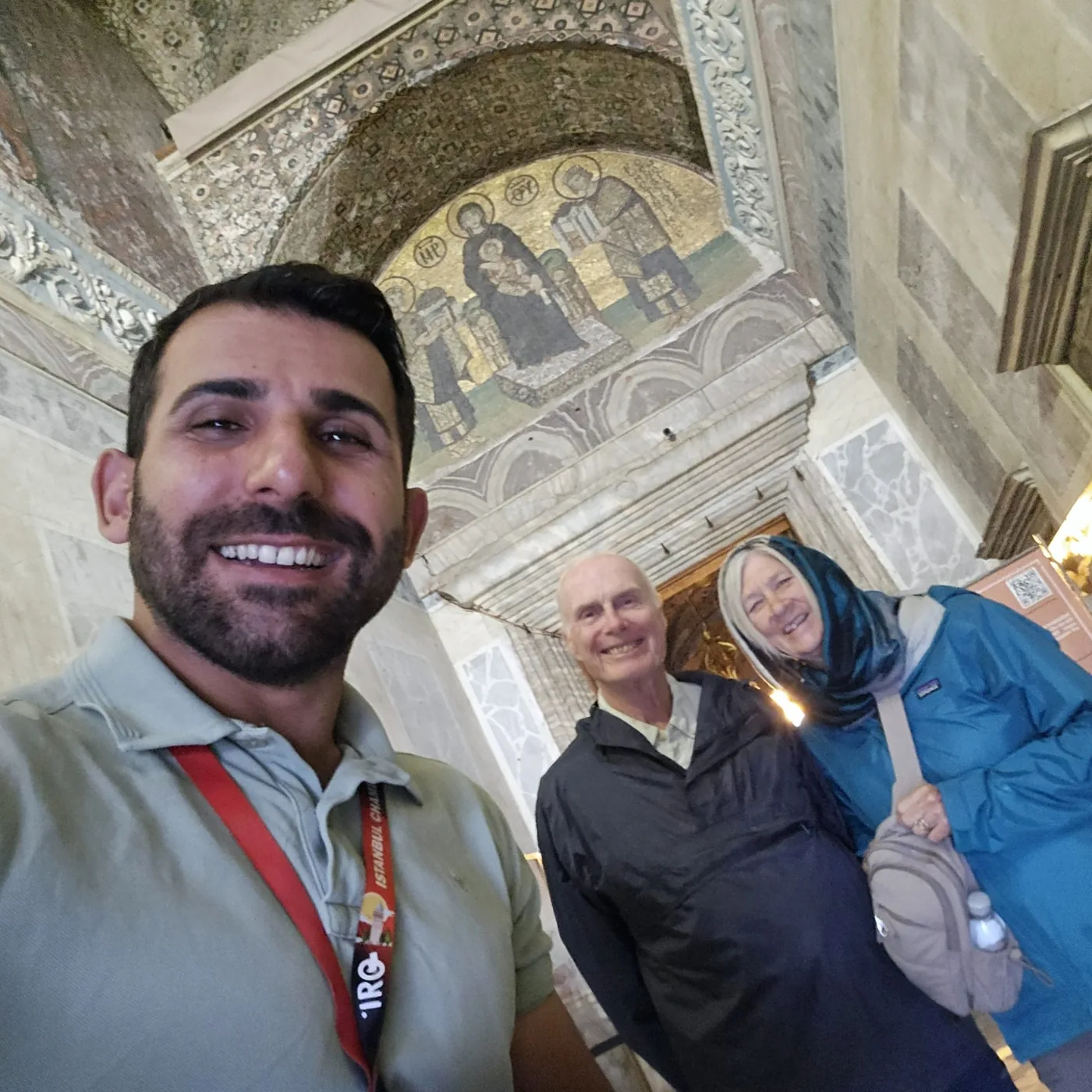
8. Chora: The Hidden Masterpiece of Byzantine Art
After exploring the land walls, our journey takes us into one of the most extraordinary artistic spaces in Istanbul.
Chora.
Known historically as the Church of the Holy Saviour in Chora and today as Kariye Mosque, this monument contains some of the finest surviving examples of late Byzantine mosaics and frescoes.
Most visitors to Istanbul have heard of Hagia Sophia.
Far fewer know about Chora.
And that is exactly why I love introducing it to guests.
The celebrated decoration of Chora dates largely to the early fourteenth century and is associated with Theodore Metochites, an influential Byzantine statesman and scholar.
Its mosaics and frescoes present a rich visual narrative of Christian history and theology.
But I do not want visitors simply to walk through the building and admire the colors.
I want them to understand the stories.
More Than Beautiful Mosaics
At Chora, we explore the meaning behind the artwork.
The life of the Virgin Mary.
Scenes from the life of Christ.
The relationship between imperial society, religion, and artistic patronage.
The remarkable image of Theodore Metochites presenting a model of the church to Christ.
And the extraordinary Anastasis fresco, representing Christ's triumph over death.
The figures, gestures, expressions, and compositions are filled with meaning.
When interpreted carefully, they reveal how people in the late Byzantine world understood faith, suffering, hope, death, and salvation.
Chora is not simply a building filled with beautiful mosaics. It is one of the greatest surviving visual narratives of Byzantine civilization.
And without a knowledgeable explanation, visitors can easily miss much of what makes it so remarkable.
Access to specific sections and artworks depends on current visitor arrangements and religious use.
9. Tekfur Palace: Discovering the Imperial World Behind the Walls
Our journey continues to Tekfur Palace, also known as the Palace of the Porphyrogenitus.
This is one of the most important surviving examples of Byzantine secular architecture in Istanbul.
Located near the northern end of the land walls, the palace was associated with the broader Blachernae imperial complex.
Its remarkable brick-and-stone façade offers a glimpse into the architectural world of the late Byzantine court.
Here, I explain how the center of imperial life shifted over time.
The early Byzantine emperors had occupied the Great Palace near today's Sultanahmet.
In later centuries, the Blachernae area became increasingly important as an imperial residence.
Tekfur Palace helps visitors understand this transformation.
But it also reveals another fascinating chapter of Istanbul's history.
After the Ottoman conquest, the building and its surroundings acquired different functions over time, including ceramic and tile production.
Once again, we discover how the city adapted its older structures to new purposes.
And from Tekfur Palace, our journey continues.
Because the walls of Constantinople did not end here.
10. Blachernae: Following the Northern Defenses
Leaving Tekfur Palace, we follow the historic northern fortifications through the Blachernae area.
This section of the route reveals another important chapter of Constantinople's defensive history.
The Blachernae district became closely associated with the later Byzantine imperial residence.
Its fortifications developed and changed over different periods.
The defensive arrangements here were more complex than a simple continuation of the main fifth-century Theodosian system.
Additional walls, towers, and fortified structures protected this strategically important northern area.
As we travel through the neighborhood, I explain how the imperial palace complex, the land walls, and the Golden Horn defenses related to one another.
This was not simply the edge of the city.
It was a place of enormous political and military importance.
And as we approach the Golden Horn, the geography of Constantinople begins to reveal another essential part of the story.
11. The Golden Horn Walls: Protecting Constantinople's Great Harbor
The Golden Horn was one of Constantinople's greatest natural advantages.
A deep, sheltered inlet, it provided an extraordinary harbor for ships traveling between the Mediterranean, the Black Sea, and distant commercial centers.
For centuries, the waterfront was filled with maritime activity.
Merchant ships.
Naval vessels.
Warehouses.
Harbor facilities.
Markets.
And communities connected to the city's commercial life.
But this valuable harbor also represented a possible route of attack.
The Byzantines therefore maintained defensive walls along much of the Golden Horn shoreline.
These fortifications formed an important part of Constantinople's maritime defenses.
As we follow the historic route of the northern sea walls, I explain how the harbor was protected and why control of the Golden Horn was essential during major sieges.
The Famous Chain Across the Golden Horn
One of the most remarkable defensive measures was the great chain that could be stretched across the entrance to the harbor.
Its purpose was to prevent hostile ships from entering the Golden Horn.
The chain became an important part of Constantinople's defensive history.
During the Ottoman siege of 1453, Sultan Mehmed II famously had ships transported overland into the Golden Horn, bypassing the barrier at its entrance.
When I tell this story, I want visitors to imagine the enormous logistical and military challenge involved.
The Golden Horn was not simply a beautiful waterway.
It was a strategic battlefield.
And the city's survival often depended on who controlled it.
12. From Ayvansaray to Cibali: Following the Forgotten Sea Walls
We continue through the historic neighborhoods along the Golden Horn.
Ayvansaray.
Balat.
Fener.
Cibali.
Today, these neighborhoods are known for their colorful streets, religious monuments, local communities, and remarkable urban character.
But they also preserve the memory of Constantinople's northern defensive boundary.
Much of the original sea-wall system has disappeared, been rebuilt, or become incorporated into later structures.
Some surviving fragments and historic gates remain visible.
Other sections can only be understood through their historical locations.
That is why this part of the experience is especially valuable with a guide.
I help visitors imagine the ancient waterfront and explain how the fortifications related to the neighborhoods, harbors, and roads of Byzantine Constantinople.
We are not pretending that the entire defensive wall still survives intact.
Instead, we are reconstructing the city's historic geography through its surviving remains and documented history.
And that makes the journey even more interesting.
Because Istanbul is not a frozen archaeological site.
It is a living city built across many centuries.
13. Eminönü and Sirkeci: The Commercial Heart of Constantinople
As we continue toward Eminönü and Sirkeci, we enter one of the busiest areas of modern Istanbul.
Ferries arrive and depart.
Commuters cross the streets.
Markets fill with shoppers.
Visitors photograph the waterfront.
But beneath this familiar modern landscape lies the memory of Constantinople's historic maritime world.
This area was closely connected to the ancient harbor districts, commercial activity, and the defenses of the Golden Horn.
During the Byzantine period, the waterfront was essential to the economic life of the city.
Goods arrived from distant regions.
Merchants exchanged products.
Ships carried grain, textiles, luxury objects, and other valuable cargo.
The sea walls helped protect this commercial zone.
As we drive through the historic waterfront, I invite guests to imagine what they would have seen a thousand years ago.
Not modern ferry terminals and traffic.
But merchant ships, defensive gates, warehouses, and a thriving imperial capital.
The surviving defensive remains are less continuous here than along the great land walls.
Nevertheless, the historical landscape remains essential to understanding Constantinople.
Without the Golden Horn and its harbors, the story of Constantinople would be incomplete.
14. Sarayburnu: Where the Two Seas Meet
Our defensive circuit brings us toward Sarayburnu, the historic promontory near the entrance to the Golden Horn.
This is one of the most geographically significant locations in Istanbul.
Here, the Golden Horn meets the Bosphorus and the Sea of Marmara.
The location helps explain why this peninsula became such an important center of settlement, trade, and imperial power.
From this area, we can appreciate how the ancient city's maritime defenses related to the waterways surrounding it.
After following the Marmara coast, the great land walls, the northern fortifications, and the Golden Horn waterfront, we have now traced the broad defensive perimeter of historic Constantinople.
The entire journey begins to make sense.
The city was protected by a combination of geography, military engineering, strategic planning, and generations of maintenance.
And there is one final part of this story I want visitors to discover.
Because protecting the city from enemies was only one challenge.
Keeping its inhabitants alive was another.
15. Nakkaş Nakilbent Cistern: The Hidden World Beneath Constantinople
Our final historical stop takes us back toward Sultanahmet.
Here, we discover the lesser-known Nakkaş Nakilbent Cistern, an underground Byzantine structure that offers a fascinating introduction to the city's water infrastructure.
Many visitors know the Basilica Cistern.
Far fewer realize how extensive Constantinople's water-management system once was.
Aqueducts brought water toward the city.
Reservoirs and cisterns helped store it.
Channels and distribution systems supported daily life.
And during periods of siege, access to stored water could become especially important.
When I introduce guests to this underground world, I connect it directly to everything we have seen during the day.
The walls protected Constantinople from external attack.
The cisterns helped sustain life inside the city.
Both required sophisticated engineering and careful maintenance.
Both contributed to the city's resilience.
And both remind us that Constantinople's greatness depended on much more than emperors, armies, and monumental churches.
It depended on the knowledge and labor of builders, engineers, craftspeople, and ordinary people.
Where available, our visit to the cistern also provides an opportunity to appreciate how ancient structures have been preserved and incorporated into the life of modern Istanbul.
There is no obligation to make any purchase at the premises.
Our purpose is to discover the history.
16. Returning to Your Hotel: A Different Understanding of Istanbul
After our final stop, we return guests to their hotel.
But I hope they return with something more valuable than photographs.
A different understanding of the city.
They have seen the defensive system that helped protect Constantinople for centuries.
They have discovered the Golden Gate and the fortress of Yedikule.
They have followed the Theodosian Walls and examined the inscriptions left by people who built and repaired them.
They have explored the extraordinary art of Chora.
They have discovered Tekfur Palace and the imperial world of Blachernae.
They have followed the Golden Horn waterfront through historic neighborhoods, Eminönü, and Sirkeci.
And finally, they have explored the underground infrastructure that helped sustain the city.
This is why I believe the experience is so special.
It connects the geography, military history, art, religion, architecture, engineering, and everyday life of Constantinople into one continuous story.
Private Tour: The Complete Walls of Constantinople
The Sea Walls, Golden Gate, Yedikule, Theodosian Walls, Chora, Tekfur Palace, Golden Horn, Eminönü & Hidden Byzantine Cistern
A Private Journey Through the Constantinople Most Visitors Never Discover
Join a licensed professional tour guide for an extraordinary journey around the historic defenses of Constantinople.
Travel comfortably by private vehicle, with selected walking stops, historical explanations, and opportunities to explore some of the city's most remarkable Byzantine monuments.
Unlike a conventional Old City tour, this experience follows the broader defensive perimeter of the ancient capital.
From the Sea of Marmara to the Golden Horn, we connect the famous fortifications with hidden artistic and architectural treasures.
Tour highlights
- Marmara Sea Walls: Understand the coastal defenses of ancient Constantinople.
- Marble Tower: Discover where the land and sea fortifications meet.
- Golden Gate: Learn about the ceremonial entrance of Byzantine emperors.
- Yedikule Fortress: Explore the relationship between Byzantine and Ottoman defensive history.
- Theodosian Land Walls: Discover towers, historic gates, inscriptions, and siege stories.
- Chora / Kariye: Experience outstanding Byzantine mosaics and frescoes, subject to visitor access.
- Tekfur Palace: Discover one of Istanbul's rare surviving Byzantine imperial residences.
- Blachernae: Explore the later imperial defensive system.
- Golden Horn Walls: Follow the northern maritime defenses.
- Ayvansaray, Balat, Fener, and Cibali: Discover the historic defensive waterfront.
- Eminönü and Sirkeci: Understand the ancient harbor districts and maritime commerce.
- Sarayburnu: See where the city's strategic waterways meet.
- Nakkaş Nakilbent Cistern: Explore the hidden engineering history of Constantinople.
What's included
- Private licensed professional tour guide.
- Private air-conditioned vehicle and professional driver.
- Hotel pickup and return transfer within the agreed service area.
- A personalized historical experience.
- Selected photo and interpretation stops.
- A flexible itinerary adapted to traffic, opening hours, and guest interests.
Not included
- Museum and monument entrance tickets.
- Meals and drinks.
- Personal expenses.
- Optional purchases.
Tour duration
Private historical experience.
Allow approximately 5–7 hours, depending on traffic, the number of interior visits, walking pace, and monument access. Because this is an extensive route, some landmarks are interpreted from outside or during the drive rather than entered.
Important visitor information
Chora is an active mosque, and access to particular areas may change according to prayer arrangements and visitor regulations.
Some historical structures may be temporarily closed or restricted due to restoration or conservation work.
The sea-wall route includes surviving sections as well as places where the original fortifications no longer stand.
The itinerary is flexible and may be adjusted to provide the best possible experience on the day.
Who is this experience for?
This tour is especially rewarding for:
- Visitors who have already explored Sultanahmet.
- Travelers interested in Byzantine and Roman history.
- History and architecture enthusiasts.
- Guests interested in medieval military engineering and siege warfare.
- Art lovers who want to understand Chora's mosaics and frescoes.
- Curious travelers looking for a deeper, less conventional Istanbul experience.
Why book with a licensed local guide?
The story of Constantinople cannot be understood through individual monuments alone.
Our licensed guides connect the historical places, explain their relationships, and bring the city to life through expert interpretation.
You won't simply see ancient walls.
You'll understand why they were built, how they worked, who defended them, and why they mattered to the history of the wider world.
Discover the Constantinople Behind the Famous Istanbul
Most travelers see Hagia Sophia.
Few discover the walls that helped protect it.
Most visitors explore the Ottoman palaces.
Few discover the surviving Byzantine imperial residences.
And while millions admire Istanbul's historic skyline, relatively few follow the ancient defensive perimeter from the Marmara Sea to the Golden Horn.
I invite you to discover a different side of Istanbul.
A city of emperors, soldiers, merchants, artists, engineers, and ordinary people.
A city that survived extraordinary challenges.
A city whose history still stands in its walls, gates, palaces, mosaics, and underground cisterns.
Come and discover the Constantinople that most visitors never see.
— Aydın
Licensed Professional Tour Guide in Istanbul
Book your private experience
Website: Book Private Istanbul
WhatsApp: +90 534 739 3846
Contact us with your preferred date, number of guests, and hotel location for availability and a private tour quotation.
Licensed guide, private vehicle and professional driver, with hotel pickup and return in the agreed service area. Museum tickets, meals and drinks are additional. Allow 5–7 hours; the final route and group arrangements are confirmed personally before booking.
Request this €300 experience →Further historical context: UNESCO — Historic Areas of Istanbul.